|
Fall
2005 UNST 121G: Forbidden Knowledge  You may download a printable pdf version of this document at http://www.forbiddenknowledge.org/Syllabi/Bianco/121sylpolicies_f2005.pdf |
|
|
Dr.
Martha J. Bianco |
|
|
Phone: |
503-706-8641 (okay to
contact at ALL hours; leave message if no answer) |
|
E-Mail: |
biancom@q7.com or biancom@pdx.edu (best method of contact is e-mail) |
|
Web Pages: |
Class Home Page , at http://www.marthabianco.com/Courses/FK/WelcomePacket.htm |
|
Office: |
URBN 370-E: Urban |
|
Mailbox: |
URBN 370-A |
|
Office Hours: |
7:30
- 8 a.m., and 11:00 - 12:00 noon, T and Th; and by
arrangement |
|
Class Time: |
T and Th, 9:30-10:45 a.m. |
|
Location: |
CH
201 |
|
|
Drew Long, 503-413-9355, lonar@pdx.edu |
|
Mentored Sessions: |
T & Th, 8-8:50 a.m., 11-11:50
a.m., and 12-12:50 p.m. Held
in CH 247 |
|
Support Liaisons: |
Academic Adviser and
International Student Liaison: Mark Isham,
503-725-4005, misham@pdx.edu,
425 SMC |
|
|
Library Liaison: Sharon
Elteto, Instruction Librarian, 503-725-4190, eltetos@pdx.edu,
280H ML |
|
This
is a year-long freshman inquiry
(frinq). As with all frinqs, students attend a lecture session with the
professor for two and a half hours a week; they also attend a smaller
lab/discussion session with a mentor
for two hours a week.
All freshman inquiries are structured around a topical theme. The theme for this frinq is
“forbidden knowledge” – knowledge that is sacred, profane,
unattainable, or prohibited. More
specifically, during fall term, this course will examine the following
topics: v
Deconstructing the Learning Process: exploration
of the learning and teaching processes; overview of nontraditional learning-teaching
approaches; process and goals of University Studies v
Defining Forbidden Knowledge: exploration of
various “types” of forbidden knowledge: inaccessible, prohibited, dangerous,
ambiguous, fragile, unconventionally expressed, and obscured by nationalism
or prejudice v
Understanding the Quest for Knowledge Throughout
History: philosophy, intellectual
history, and literature inform our understanding of how thinkers and writers
have grappled with the temptations and dangers of “forbidden
knowledge” – from Greek mythology (Prometheus and Pandora) to
stories of Adam and Eve’s “fall” and the struggle between
rationalism, religion, and science v
Case Study: Forbidden Knowledge in |
|
|
Note
that three of the four texts will be used all year. Each term you will purchase one or two
additional (relatively inexpensive) books and you will always have online
supplemental readings. |
ü Forbidden Knowledge: From Prometheus to Pornography, by Roger Shattuck (Harvest Books, 1997). This book will be used all year. ü Hodges’ Harbrace
Handbook , 15th
edition, by John C. Hodges et al. (Thomson Wadsworth, 2004). This book will be used all
year. ü ü Seeing Through Statistics, 3rd edition, by Jessica M. Utts (Thomson Brooks/Cole, 2005). This book will be used all
year. ü Online readings, as required and/or recommended in
the syllabus. |
|
|
Lecture
guides, which provide an outline of each class
lecture and WWW links to relevant sites are at http://www.marthabianco.com/Courses/FK/fkguides.html. NOTE: These will not be handed
out in class (except for the first day), so you are responsible for printing
these out and bringing them to class. |
||
|
|
Ø
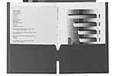
three slim folders with pockets for maintaining
and turning in class assignments (see example to left; these are available in
a variety of colors at the PSU bookstore for 50¢); you will label
these in mentor session. Ø
a removable
digital storage device (e.g., CD-R or thumb drive) for maintaining
digital copies of all your work Ø
headphones for use in computer labs Ø
an e-mail
account and subscription
to class Yahoo listserv Ø
frequent
access to a computer with Internet and printing capabilities (at least three times per week) Ø
access to
the following software: ü
Windows Media Player (required and
available for both Windows and Mac) ü
QuickTime
for Windows or Mac
or RealPlayer for Windows or Mac ü
MS-Office Word, PowerPoint, and Excel or Open
Office equivalents ü
Nvu (free) or other easy-to-learn-and-use web-creation
software ü
pdf-conversion
software, such as PDF4U
(free) |
|
|
This
course places a special emphasis on the following skills: Ø
Critical thinking, diversity,
and ethics
and social justice Ø
Writing (narrative,
expressive, argumentative, and research styles) Ø
Quantitative literacy (scientific method, sampling, analysis,
interpretation, reporting) Ø
Technological
literacy (Internet research, e-mail
and attachments, productivity software, image manipulation, web page creation,
e-portfolio development) Ø
Research (performing university-level research, using MLA
style, culminating at the end of the year with a major research report) Ø
Group work (negotiating working group relationships, sharing
personal and professional experiences, providing support and advice as
appropriate, peer review, group decision-making) Ø
Community-based
learning (year-long, group or
individual field research and service regarding the role of education in the
community) Ø
Presentation
techniques (practice in
“public” speaking in very small groups; individual or group
presentations; and use of visual aids, including PowerPoint, web pages,
e-portfolios, and poster boards) Ø Personal growth (self-inventories regarding learning styles and multiple intelligences; time management exercises; autobiographical writing; goal-setting; self-assessment and reflection; one-on-one meetings with professor) |
||
|
(Note: This is subject to
change, depending on circumstances!) Ø Deconstructing the Learning Process: What
Can We Know? Teaching and Learning “Outside the Box”;
Revolutionary Educators; the University Studies Model; Portfolio Thinking Ø What Is “Forbidden Knowledge”? The Six
Types of Forbidden Knowledge Ø The Pursuit of Knowledge, Sacred and Profane: A History of the Knowledge Seekers Ø Stories of Creation and the Fall: From
Prometheus to Ø Faith, Reason, and the Problem of Portée: Pascal, the Enlightenment, and the
Problem of the Limits of Faith Ø Modern Myths of Creation and the Fall: Faust
and Frankenstein Ø Forbidden to Learn:
Unveiling Ø From Zoroaster to Islam, Marx and Foucault: Religion and Gender in Ø Reconstructing the Learning Process |
||
|
You are expected to: Ø
do
your best, putting forth
your full effort and providing your best work Ø
study
at least 2 hours per week for each credit hour (because this is a 5-credit-hour class,
expect to study at least 10 hours per week for this class
alone) Ø
attend
two 20-minute one-on-one meetings with the professor each term Ø
be
on time for class (see
“Be on Time” section under GRADING) Ø
turn
in all assignments on
time unless there are emergency circumstances Ø
be prepared for class, having done
the readings and exercises Ø
actively
participate in class
(which includes taking notes) Ø
be
subscribed to the listserv and check your e-mail frequently Ø
save
all of your work on a
removable digital storage device Ø
contact
the professor or mentor to
discuss any concerns related to this class Ø
ask
for help when you need it
and communicate any concerns or questions you may have Ø
endeavor
to respect and tolerate diversity in race, ethnicity, religion, political perspectives,
sexuality, gender, and abilities |
||
|
The only scheduled exam in this class
is an open-note, take-home exam covering this syllabus. This exam will be given to you on the
first day of class and must be returned on the second day of class. You are expected to
demonstrate your grasp of skills and subject matter presented in this class
through your various assignments
and through mentor and class discussion and participation. If students fail to demonstrate adequate progress in goal
areas for this class, in assignments, or in keeping up with reading, I
reserve the right to administer exams, including pop quizzes. |
||
|
UNST GOALS: Writing
Writing; Critical Thinking; Diversity;
Ethics; Social Justice Critical Thinking; Ethics; Reflection;
Portfolio Development Community-Based Learning; Critical
Thinking; Presentation; Group Work; Diversity; Ethics; Social Justice Critical Thinking; Oral Presentation
Skills; Working in Groups; Diversity; Ethics Quantitative and Technological Literacy Critical Thinking; Ethics; Writing;
Quantitative & Technological Literacy Critical Thinking; Ethics; Reflection;
Portfolio Oral, Verbal, and Visual Presentation;
E-Portfolio Group Work; Ethics; Social Justice;
Responsibility; Diversity |
Instructions for each
assignment will be presented in class and in mentor sessions. Due dates will appear on the Schedule. Reminder e-mails will also be sent out
to the class listserv, and these will contain links to instructions. Detailed instructions and useful
resources can be found at: http://www.marthabianco.com/Courses/Cities/Assign/default.htm. Elements are subject to change as
circumstances may dictate. 1.
Short-Writes: Students
will be assigned five short writing exercises (1 to 2 pages each) for
the purpose of practicing the art and technique of university
writing. Short-Write
instruction and assignments will be given on Tuesdays, due
the following
Tuesday. Worth 20 points each
(total of 100). 2.
SECRETs: Write two 2- to 3-page SECRETs
(Synthesize-Explain-Critique-Reflect-Expand-Theorize)
using the analytical or argumentative writing style to address questions
related to the substantive material presented in lectures and in
readings. 100 points each (total of 200). 3.
Learning Reflections: Twice each term, write a reflective essay evaluating what
you have learned and some of your experiences participating in class and
doing the assignments. Write a
total of two per term, worth 50 points each, for a total of 100. 4.
Community-Based
Learning (CBL) Project: Over
the course of the year, students will conduct background research and field
work regarding education in the community. Students will work with one another,
the mentor, and the professor in a “working team” style, deciding
the scope and nature of the overall project. Each term, the CBL work will be worth 100
points. 5.
RAIDs: (Read-And-Initiate-Discussion): Be
prepared every Thursday to initiate a small-group discussion in response
to peer-, mentor- or professor-provided questions based on the readings. Four students will be randomly chosen
for presentation each Thursday to lead break-off groups in discussion. Worth 60 points (your
presentation + 40 points participation in others’ presentation,
for 100 points total). Note: If class time constraints dictate, RAIDs may take place in mentor session. 6.
Quantitative
and/or Technology Exercises: As necessary, assignments will be given to provide hands-on
practice with quantitative or technological methodologies under study. These exercises will be worth a total
of 100 points. 7.
Research
Paper: Each term, students will progress
incrementally toward a final research project, due at the end of spring
term. Points for this project will
vary by term. For fall term, the
work toward this project will be worth 50 points. 8.
Personal
Growth: Students will be expected to engage in
a variety of self-assessment and reflection exercises, goal-setting, personal
inventories, discussions with peers and mentor, and one-on-one meetings with
the professor. These activities
will be worth a total of 85 points. 9.
Presentation:
Students will create a personal web page to practice web page
creation, personal reflection, presentation skills, and e-portfolio
design. This term’s final
product will be worth 85 points. 10.
Mentor Sessions:
|
|
All elements of this section are subject to change as
circumstances may dictate. |
||||
|
Scale: |
In general, students are graded as follows: 94.91-100% A excellent 89.79-94.90 A- superior 83.15-89.78 B+ very
good 76.41-83.14 B good 69.67-76.40 B- fairly
good 63.02-69.66 C+ above
average |
56.28-63.01 C satisfactory 49.54-56.27 C- substandard 22.80-49.53 D+ inferior
15.34-22.79 D poor 00.67-15.33 D- very
poor 00.00-00.66 F failure |
||
|
Excused Absences: |
For each unexcused class absence, students
lose two percentage points (for example, from 94% to 92% for one
unexcused absence). After
the first three absences, students lose four percentage points per
absence (for example, from 94% to 78% for four unexcused absences). Note that unexcused class and
mentor session absences are cumulative: for example, missing a Tuesday class
and that Tuesday’s mentor session counts as two absences. You may make up a mentor session
absence by attending another mentor session on the same day. Students who come in more than 5 minutes late will be docked .50
percentage points for each 15 minutes (rounded up) that they are late. For example, if you come in 7
minutes late, you will be docked .50 percentage points (e.g., 94% to
93.50%). If you come in 18
minutes late, you will be docked 1.00 percentage point (e.g., 94% to
93%). If you come in 45 minutes late, you will be docked 1.50 percentage
points (e.g., 94% to 92.50%).
These “late fees” can add up. For example, if three-fourths of the
way through the term, you have 720/800 points (91 percent), you are carrying
an A-. However, if you were late
8 times, rounded up to 120 minutes, this would result in lowering your total
points by 4 percentage points (.50 x 8), bringing you to 87 or a B+. Except in the most dire of extenuating circumstances, you must
request to be excused before you miss a class. You
may e-mail me at biancom@q7.com or
call me any time at 503-706-8641.
Absences are excused in cases of illness, family emergencies, and
religious observances only.
|
|||
|
|
This
course focuses on the art and skill of university-level analytical
writing. I assume that you have college
entry-level writing, grammar, punctuation, and spelling skills and/or
that you committed to learning and improving. Always feel free to contact me, your
mentor, or the When writing for this
class, always
use all of the resources at http://www.marthabianco.com/Courses/Cities/checklist.htm
Papers may be typed on recycled paper or
typed on both sides to conserve resources. q adhere to MLA style
guidelines q include an MLA-style title
page or title section q be double-spaced q have MLA-style numbered
pages q have a 1-inch margin
(exactly) on all four sides q
use a 12-point serif font (e.g., Times New Roman) |
|||
|
College as a New Experience Challenges, Demands, Pressures Balancing School, Work, and “Life” High
School Versus College Grading Stress, Sleep, Financial Issues, Physical and
Emotional Health I Care About You As a Whole Person, an Individual: My Job Is To Help You Succeed! |
Most students find that college is
much more difficult than high school.
In addition to being in a completely new environment, you are very
likely taking a number of challenging classes, all of which ask you to read
and write at what seems like an impossible rate. You may feel that you are not well
prepared for some of the demands of this class or others – that your
writing ability is not what you feel it should be, that you are not as
computer literate as you’d like, that your time-management skills are
not as strong as they could be.
In addition, many students work – some hold one or more
part-time jobs. Others have
partners or spouses, children, or other responsibilities. You may be new to this country,
struggling with English as a second language. Or, you may be returning to college
after many years’ absence, raising children or pursuing a different
career. As a rule of thumb,
most students receive grades two or more levels below what they are used to
in high school. For example,
although you may have been a straight-A student in high school, you may find
yourself receiving Cs on assignments in your college classes. Your
grades will improve over time. College is stressful. Most students become sleep deprived
and susceptible to illness. You
may have moments of depression or anxiety, feeling overwhelmed. If you find yourself missing classes
or assignments or having difficulty in general due to ongoing challenges
(health, family, employment, learning disabilities, ESL), please contact
me for assistance as soon as you can. We will work out a learning
arrangement that best suits your situation. I treat
students individually and holistically, which means I believe
in taking into consideration all elements of each student’s life as
they may relate to the learning experience. It is critical that you contact
me as soon as you are aware of a challenge that might affect your
learning. Remember: it is my job to help you. Please do not hesitate to ask for
help, no matter what your circumstances. |
|
In order to contribute to a meaningful learning experience, students
are encouraged to share their diverse life experiences—political,
religious, ethnic, cultural, lifestyle, etc.—and to show mutual
respect, tolerance, and open mindedness toward their
fellow students. Whether
conservative or liberal, your point of view is expected to be heard and
respected. To that end, scholarly
(empirically supported) debate is welcome; “flaming” and
unsubstantiated opinion are not.
You are not asked to accept or agree with views and lifestyles
different from your own; however, you are expected to be respectful of others
and tolerate their differences. To
paraphrase a quote attributed to Voltaire, you may not agree with the beliefs
of your fellow students, but you should be willing to defend their rights to
have those beliefs. |
|
|
As members of a learning community located in an urban center, we
all have the responsibility to explore subject matter that may be outside our
earlier experience or contrary to our own beliefs. For example, we may study evolution
within the context of how “revolutionary” To these ends, we may read materials and watch films that
some may find disconcerting, offensive, unsettling, or otherwise disagreeable. You are asked to approach these
materials as social scientists, not as moral judges. If your religion expressly forbids
your viewing or reading of certain materials, please see me. If for any other reason you may
not want to be exposed to such materials, please see me to discuss whether
this class is appropriate for you or not. Students will not be excused, for
example, from viewing a film that is objectionable to them on political or
personal morality grounds.
Please contact me ahead of time if you have concerns. |
HARASSMENT
Stalking Harassment Sexual Harassment Sexual Assault For Help or Advice |
Please print, read, and familiarize yourself with Violation of
the Student Code of Conduct is also a violation of These sections regarding various forms of harassment
come from Section 577-031-0136 of (8) Stalking, defined as repeatedly
contacting another person without a legitimate purpose when: (a) the
contacting person knows or should know that the contact is unwanted by the
other person; and (b) it is reasonable for the person in that situation to
have been alarmed or coerced by the contact. As used in this
subsection, “contacting” includes but is not limited coming into
the visual or physical presence of the other person; following another
person; and sending written communication of any form to the other person, by
themselves or through a third party. (9) Harassment, which includes but is not
limited to: (a) verbal or physical conduct by an individual based on
another individual’s age, ability, national origin, race, marital
status, religion, sex or sexual orientation that interferes or prevents
the person from conducting his or her customary or usual affairs, puts the
person in fear of his or her safety, or causes the person to suffer actual
physical injury; (b) conduct less than a physical attack or interference with
a person, such as hazing or threatening action, which is intended to
subject another person to offensive physical contact, physical injury,
property damage, or cause physical impact, such as making threatening phone calls,
sending or posting (electronically or otherwise) threatening letters, or the
vandalism or misappropriation of a person’s property. (10) Sexual harassment, defined as unwanted
and unwelcome sexual advances or requests for sexual favors and other verbal
or physical conduct of a sexual nature where: (a) submission or rejection
of such conduct is made either explicitly or implicitly a term or condition
of an individual’s employment or participation in a
University-sponsored educational program or activity; or (b) submission to or
rejection of such conduct by an individual is used as a basis for academic or
employment decisions affecting the individual; or (c) such conduct has the
purpose or effect of unreasonably interfering with an
individual’s academic or work performance, or of creating an
intimidating, hostile or offensive educational or working environment. (11) Sexual assault,
which includes, but is not limited to: (a) rape, (b) sexual
misconduct, or (c) unwanted sexual contact of any kind, or threat
of such contact. Sexual contact shall be considered
“unwanted” or without consent if no clear consent is freely
given; if inflicted through force, threat of force, coercion, or if
inflicted upon a person who is unconscious or otherwise without the physical
or mental capacity to consent. If sexual contact is inflicted on
someone who is intoxicated or impaired in the exercise of their judgment
by alcohol or drugs, it will be considered without consent. If you feel you have been a victim of any form of harassment or
if you are not sure whether certain behavior constitutes harassment, please
contact your professor, your mentor, the Affirmative Action Office, 122
Cramer Hall, 503-725-4417, http://www.afm.pdx.edu/;
the Ombud’s Office, 169 Cramer Hall, http://www.ombuds.pdx.edu/; or the Women’s
Resource Center, 503-725-5672, wrc@pdx.edu,
http://www.wrc.pdx.edu/. |
PLAGIARISM
ACADEMIC
DISHONESTY For Help or Advice: |
the act of
claiming someone’s work as your own through copying it without giving
the creator of the work credit. Plagiarism can also include using another
person’s theories, ideas, or phrases without proper attribution. The
simplest way to avoid plagiarizing is to always cite the sources from which
you gather information or develop arguments. (http://www.lib.pdx.edu/instruction/citationplag.html) Further,
academic dishonesty is defined as cheating, and fraud, including but not limited to: (a)
plagiarism, (b) the buying and selling of course assignments and research
papers, (c) performing academic assignments (including tests and
examinations) for other persons, (d) unauthorized disclosure and receipt of academic
information and (e) falsification of research data. (http://www.pdx.edu/media/c/o/CodeofConduct.doc) Plagiarism a
violation of the PSU Student Conduct Code and A student who has been found to have committed plagiarism is
subject to the following sanctions: Ø F on exam or
assignment involved Ø Disciplinary
reprimand Ø Disciplinary
probation Ø Loss of
privileges Ø Required
community service Ø Suspension
from PSU for up to two years Ø Dismissal from
the University Most students do not fully understand the definition of
plagiarism or the seriousness of the offense. Please read Earl Babbie’s
comments at http://www.csub.edu/ssric-trd/howto/plagiarism.htm. If you are unsure whether you are committing
plagiarism, please contact your professor, your mentor, or the If I suspect you have plagiarized, I will ask to meet with you to
help resolve the matter. |